Access Request Inbox
Approve or deny with a reason, and an undo that releases what it superseded.
PROGet Access Request Inbox and 168 other Pro components with pro lifetime — Get Pro
- Category
- Workspace
- Access
- ProPro · unlocked
- Source
- 749 lines · one file
The decision inside it
Denial asks for a reason, including “Other”
Canned reasons cover most of it and a text field covers the rest. The red Deny stays disabled until there is something to send.
When to use it
Use Access Request Inbox for requests to join a project or file: who asks, for what and which role, approve with a role, deny with a reason, and undo. Approving supersedes the same person's other requests for that resource.
Installation
How you get it
Paste this into Claude Code, Cursor, Codex or any coding agent. It installs the file and uses it as it is, instead of writing a new one.
Use Liro's Access Request Inbox for this.
Install it: npx shadcn@latest add @liro/access-request-inbox
(the @liro registry is set up in components.json, with LIRO_KEY in .env.local)
Import it from @/components/ui/access-request-inbox.
Do not rewrite or restyle it. Pass my data through its props
and keep its built-in states.
For the full brief with every prop and the mistakes assistants usually make, use Copy prompt above. Pro components install through the @liro registry with your CLI token: see the Namespaced tab.
Usage
import { AccessRequestInbox, type AccessRequest } from "@/components/ui/access-request-inbox";

const requests: AccessRequest[] = [
  { id: "r1", name: "Ada Moss", email: "ada@vertically.dev", resourceId: "msa", resourceName: "Vertically MSA", requestedRole: "member", message: "Need to review clause 4", askedAgo: "1h" },
];

export function Requests({ approve, deny }: { approve: (id: string, role: string) => void; deny: (id: string, reason: string) => void }) {
  return <AccessRequestInbox requests={requests} onApprove={approve} onDeny={deny} />;
}
API reference
“Copy prompt” above puts a full brief on your clipboard, install command, dependencies, props, and the mistakes an assistant usually makes with this component.
Props
Read from the component’s own TypeScript interface when the site is built, so this table cannot drift from the file you install.
| Type | Notes | ||
|---|---|---|---|
requests | AccessRequest[] | No | – |
title | string | No | Panel heading. |
onApprove | (id: string, role: AssignableRole) => void | No | Approve with the role the reviewer settled on, which is not always the role that was asked for — the commonest correction in this queue is granting Viewer to someone who asked for Member. |
onDeny | (id: string, reason: string) => void | No | – |
onDismiss | (id: string) => void | No | Clear a superseded row out of the queue. |
onUndo | (id: string) => void | No | Undo the last decision, while the row is still on screen. |
emptyLabel | string | No | Shown when nothing is waiting. |
look | Look | No | Layered sets it in a tray, the heading above the card and the status in the strip below. Flat is one card. |
Dependencies
npm packages
clsxframer-motionlucide-reacttailwind-mergeLiro foundations, installed alongside it
liro-themeavatarmenurole-chipAccessibility
- Keyboard reachable throughout, in visual order
- Focus trapped in overlays, Escape closes them
- Focus returns to whatever opened it
- Live regions announce what changed, not that something did
- Honours prefers-reduced-motion
Responsive behavior
- Sizes to its container, not the viewport
- Usable from 320px up
- Pointer-based interaction, so trackpad and touch both work
- No hover-only affordances
More like Access Request Inbox
All Workspace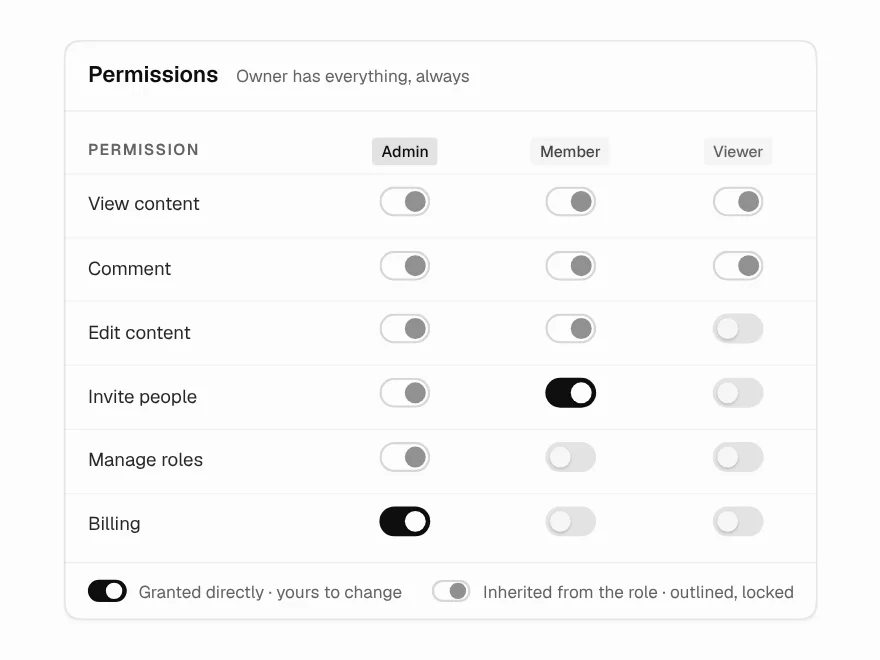 Pro
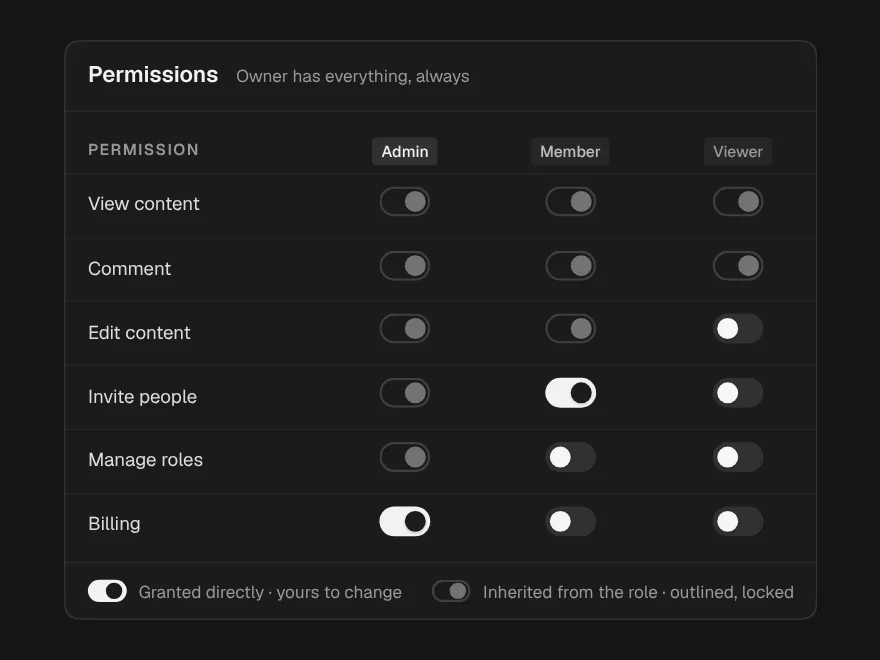
Roles & Permissions Matrix
Roles and permissions matrix.
 Pro
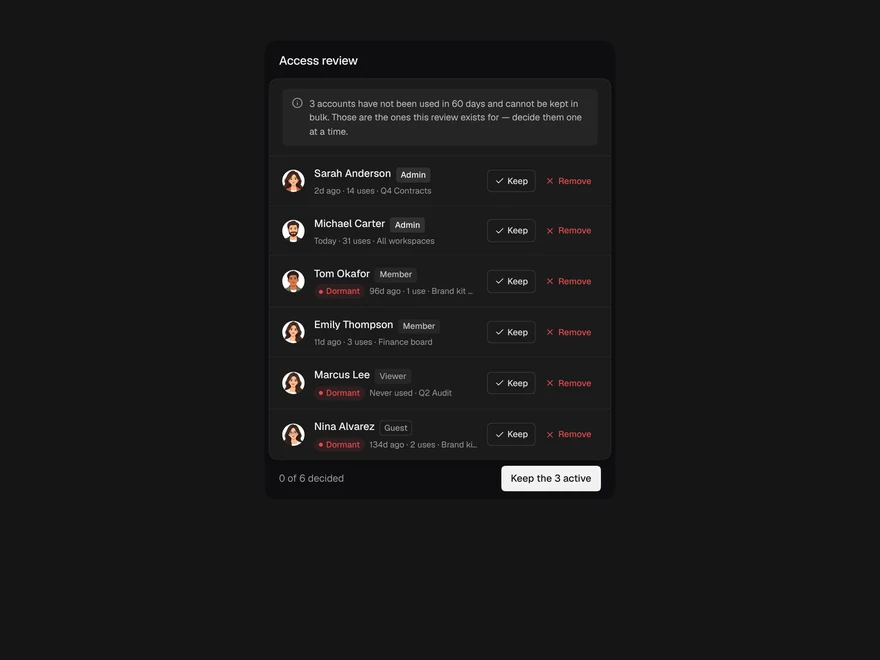
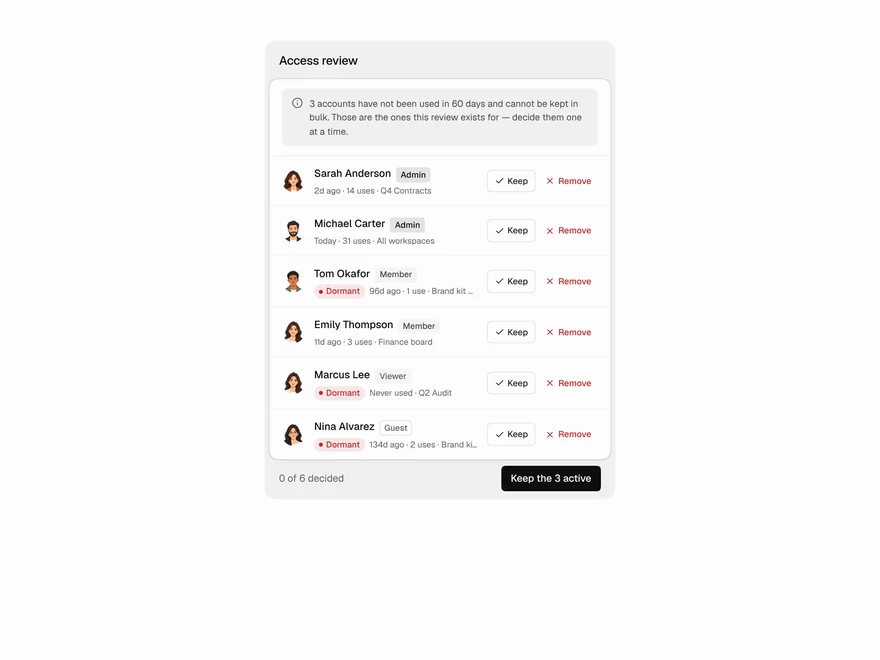
Access Review
Periodic access review for team accounts.
 Pro
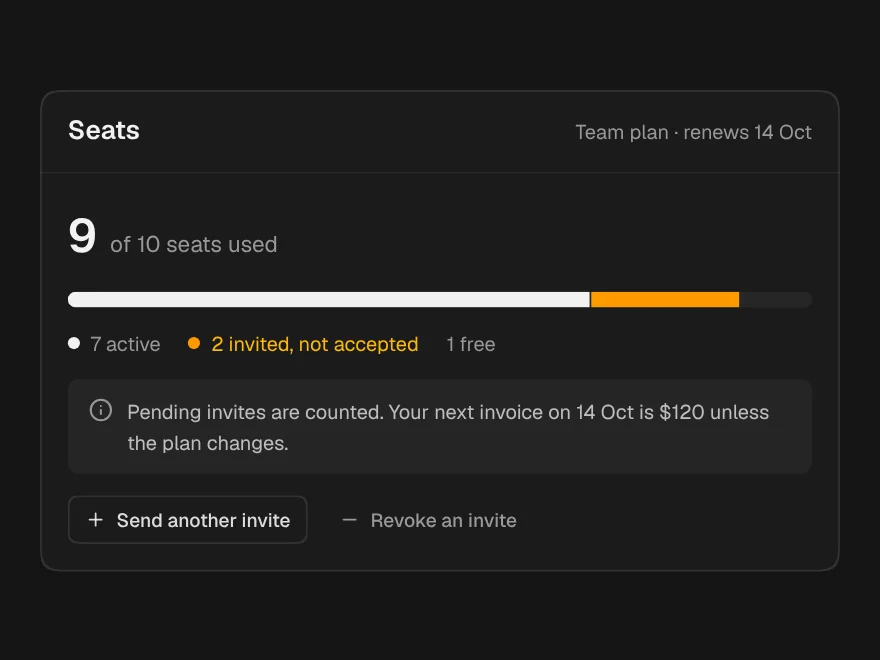
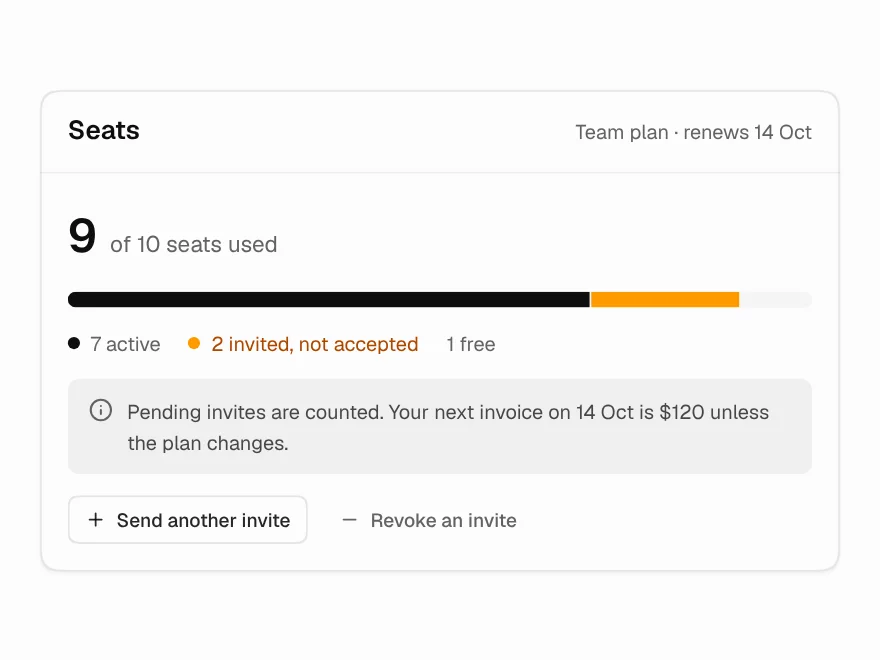
Seat Usage & Limits
Seat usage meter with pending invites.
 Pro
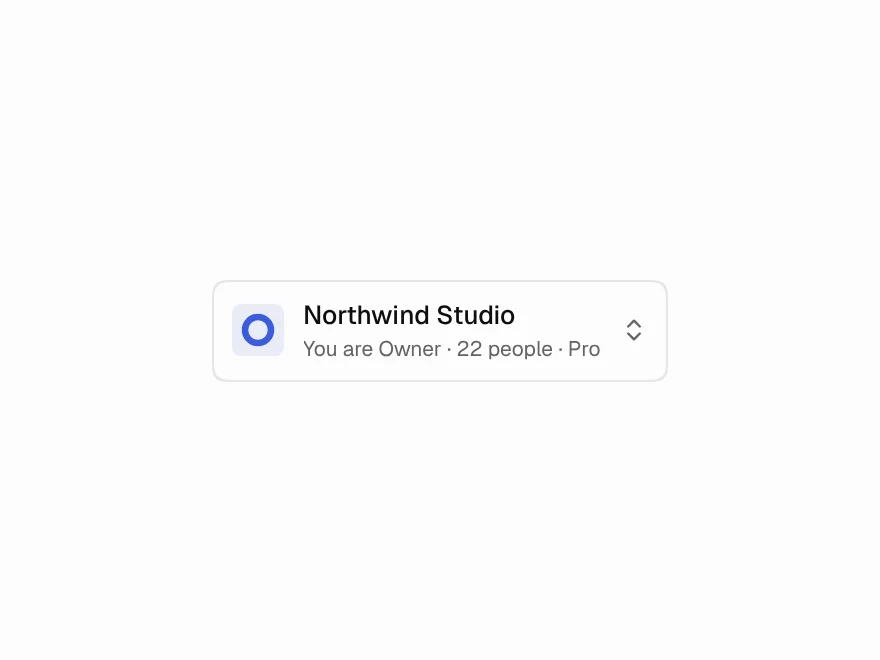
Team Switcher
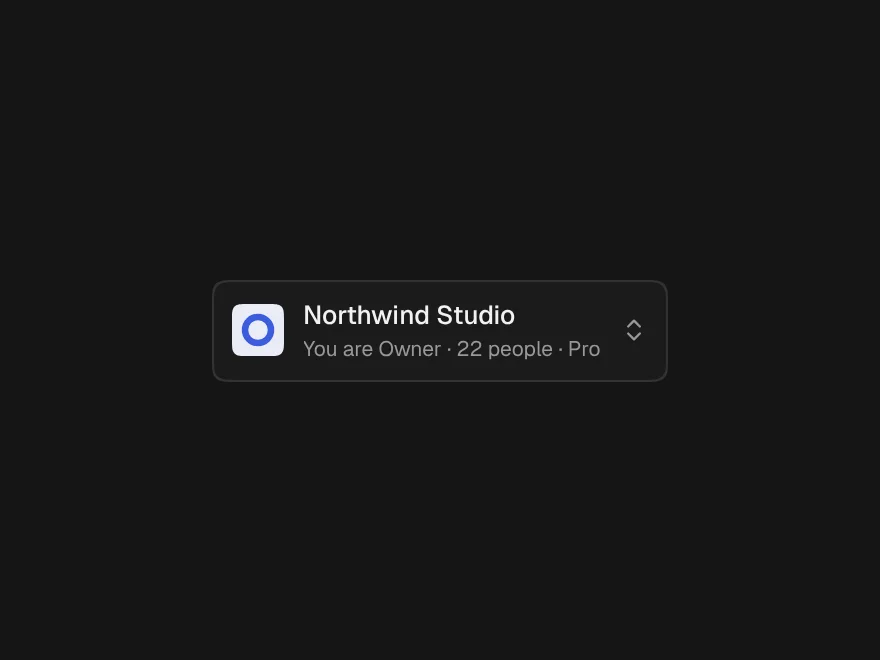
Workspace switcher showing your role in each.
 Pro
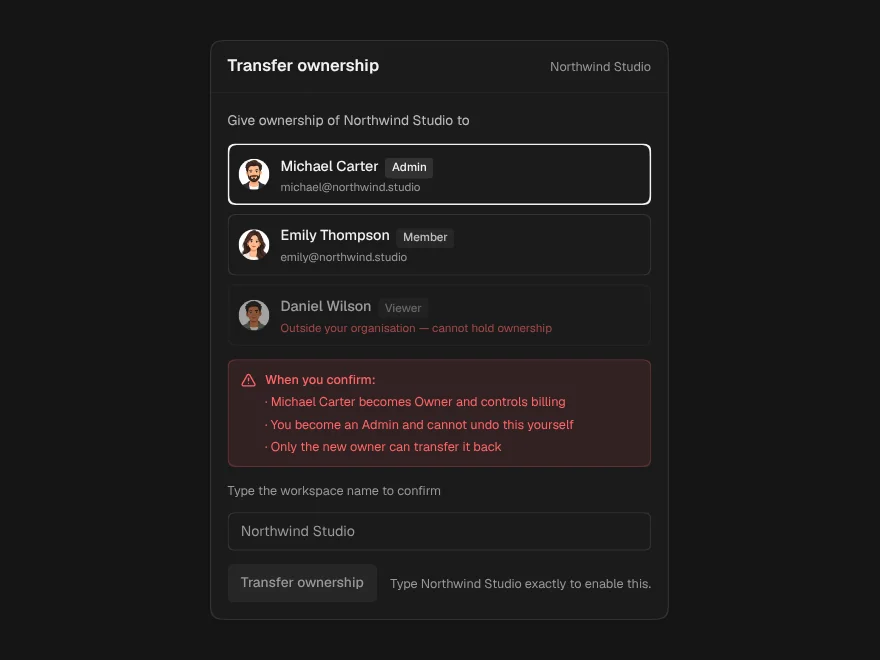
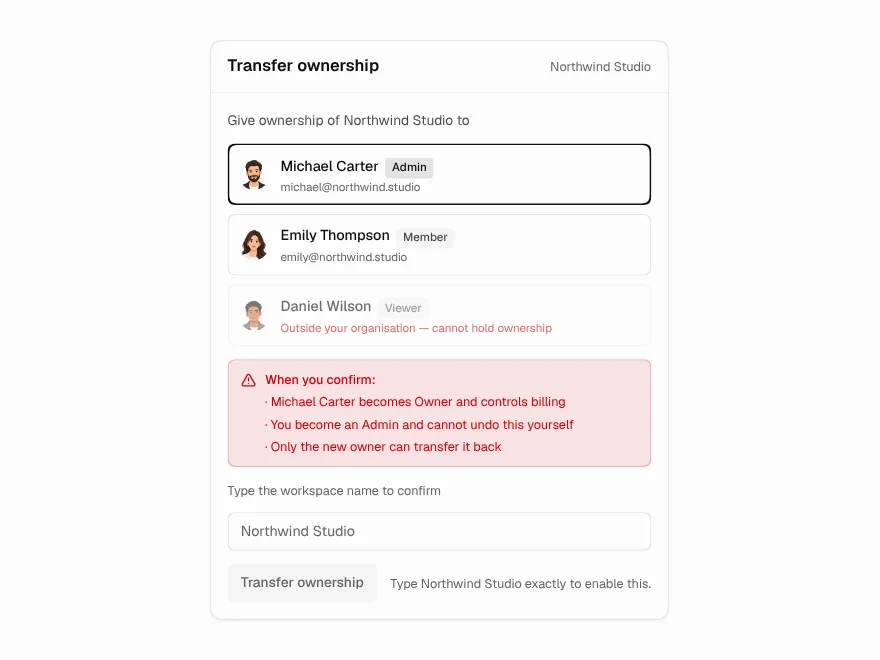
Transfer Ownership
Safe transfer of workspace ownership.
 Pro
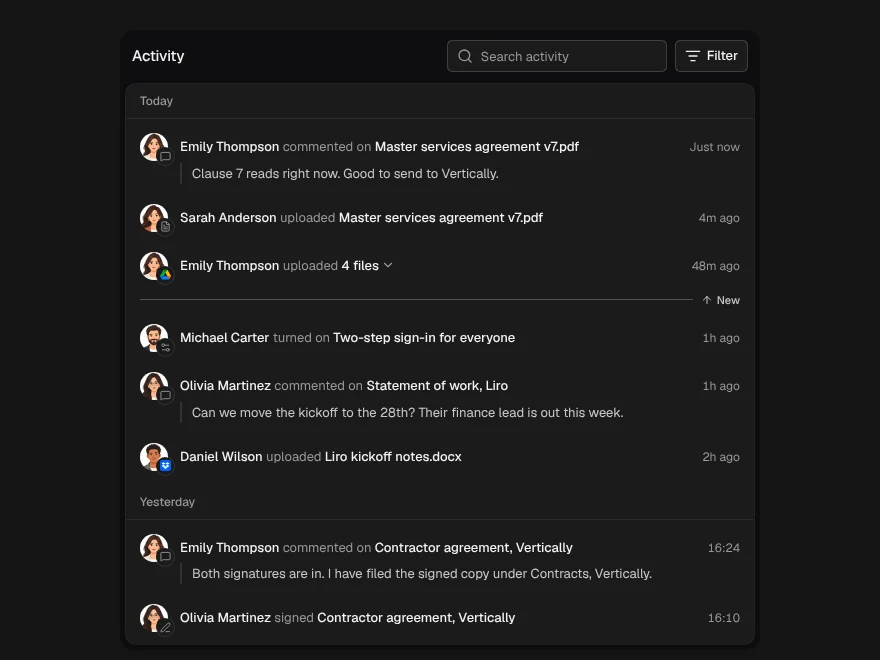
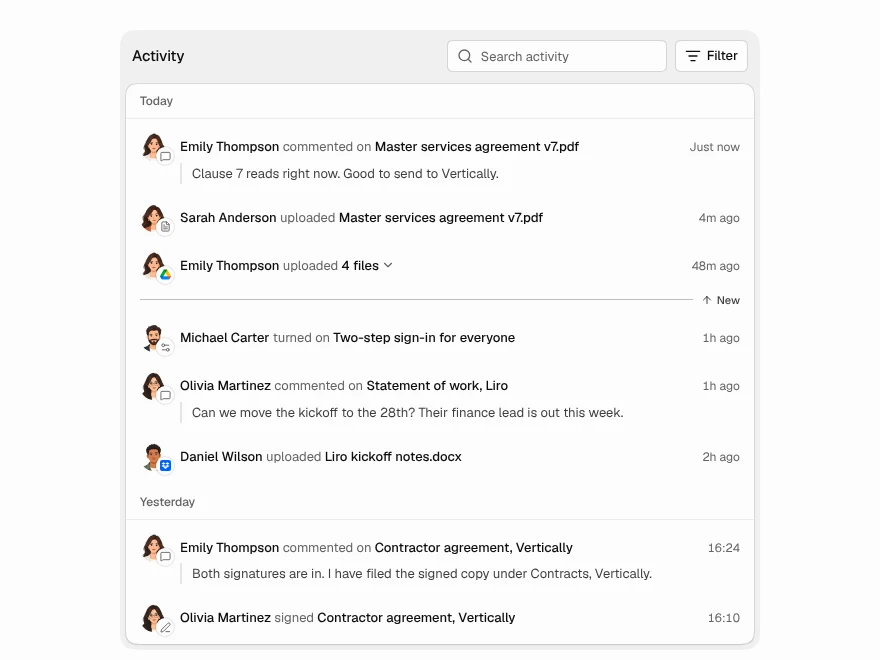
Activity Feed
Live team activity feed grouped by day.